
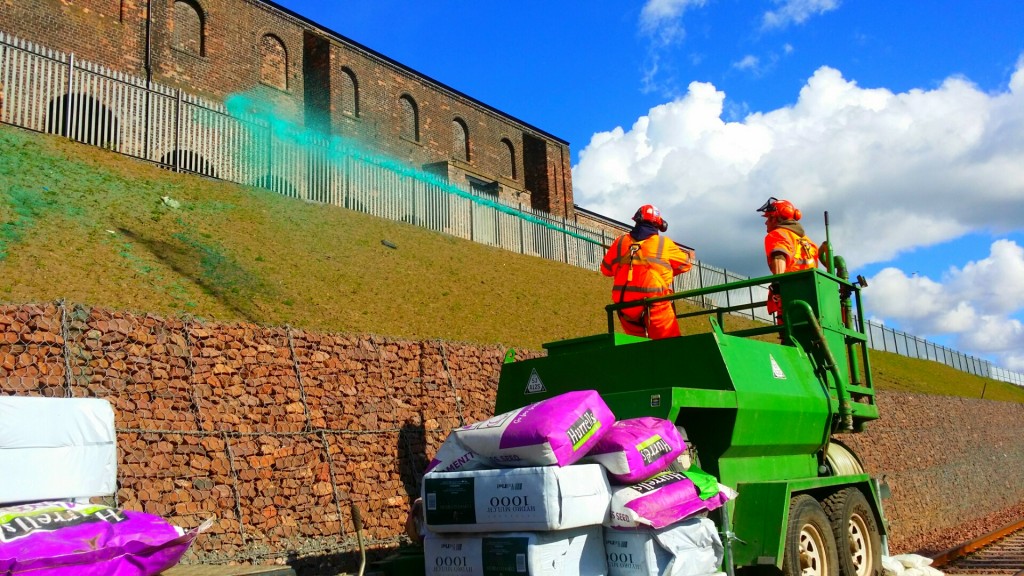
What is Hydroseeding? A Complete Guide for the UK
What is Hydroseeding?
Hydroseeding — also known as hydro seeding, hydromulching, or hydraulic mulch seeding — is a planting technique that combines grass seed, water, fertiliser, and mulch into a single slurry mixture, which is then sprayed directly onto prepared ground using a specialist hydroseeder machine.
The result is faster, more uniform germination than traditional dry seeding, with the added benefit of immediate erosion protection. It’s widely used across construction, civil engineering, highways, railways, golf course management, and ecological restoration projects throughout the UK.
While hydroseeding has been well established in North America for decades, it is a growing technique in the UK — with more contractors and specifiers discovering its advantages over conventional seeding methods every year
How Does Hydroseeding Work?
The process is straightforward but requires the right equipment and materials to get the best results.
A hydroseeder machine — typically a trailer-mounted or skid-mounted tank unit — is filled with a carefully measured mixture of water, grass seed, hydro mulch, fertiliser, and a tackifier (a binding agent that helps the mixture adhere to slopes and uneven surfaces). The machine agitates the slurry to keep it consistent, then pumps it through a hose and spray nozzle directly onto the target area.
The mulch in the mixture acts as a protective layer, shielding seeds from wind, sun, and rainfall while locking in moisture to encourage germination. As the mulch gradually breaks down, it adds organic matter to the soil, further supporting early plant growth.
A good hydroseed application can cover large areas quickly — making it significantly faster than hand seeding or laying turf across uneven or inaccessible terrain.
Benefits of Hydroseeding
Hydroseeding offers a range of advantages over traditional seeding and turfing methods, particularly for larger or more complex sites.
Speed and coverage. A single hydroseeder can cover hundreds or thousands of square metres per day, making it the most efficient option for large-scale revegetation, highway verges, embankments, and construction sites.
Immediate erosion control. The mulch layer bonds to the soil surface on application, providing erosion protection from day one — before any grass has germinated. This is critical on slopes, riverbanks, and disturbed ground where bare soil is vulnerable to wind and rainfall.
Better germination rates. The hydroseed slurry keeps seeds in close contact with the soil and maintains moisture levels, typically resulting in faster and more even germination compared to dry broadcasting methods.
Cost-effectiveness. For areas above roughly 500m², hydroseeding is almost always more cost-effective than turfing, and faster than hand seeding. The larger the area, the greater the saving.
Versatility. Hydroseeding works on slopes, banks, uneven terrain, and areas that are difficult or impossible to turf. It’s suitable for grass seed, wildflower mixes, and specialist erosion control formulations.
Reduced weed pressure. The mulch layer provides light suppression that slows early weed establishment, giving the desired seed mix a competitive head start.
Hydromulching vs Hydroseeding — What's the Difference?
The terms are often used interchangeably, but there is a technical distinction.
Hydroseeding typically refers to a lighter mulch application where grass establishment is the primary goal. Hydromulching uses a heavier, denser mulch layer — sometimes without seed — primarily for erosion control and slope stabilisation. In practice, many applications combine both objectives.
At Hydro App, we supply the full range of hydro mulch products — from standard wood fibre mulch through to engineered fibre matrix and flexible growth medium for the most demanding erosion control specifications.
Hydroseeding Materials: What Goes in the Mix?
The quality of a hydroseed application depends heavily on the materials used. A basic mix contains:
Hydro mulch — the fibre carrier that holds the mix together and protects seeds. Wood fibre is standard; [engineered fibre matrix products offer higher performance on challenging sites.
Grass seed — selected to match the site requirements, whether that’s a hard-wearing amenity mix, a fine sports turf blend, a wildflower meadow, or a specialist erosion control species mix.
Fertiliser — a starter fertiliser is typically included to provide early nutrition during germination.
Tackifier — a bonding agent that helps the slurry adhere to slopes and prevents it washing off in rain. Tackifiers and dust control products are particularly important on gradients above 1:3.
Agronomic additives — depending on the specification, additional soil amendments such as biostimulants, moisture retention agents, or pH adjusters may be included.
Where is Hydroseeding Used in the UK?
Hydroseeding is suitable for a wide range of applications across multiple sectors:
Highways and infrastructure. Motorway embankments, road verges, roundabouts, and cutting slopes are among the most common hydroseeding applications in the UK. Read more about hydroseeding for highways.
Railways. Embankments, cuttings, and lineside vegetation management benefit from the speed and reach of hydroseeder equipment. Read more about hydroseeding for railways.
Erosion control. Riverbanks, coastal areas, quarries, and construction sites all generate areas of bare or disturbed ground vulnerable to erosion. Hydroseeding with the right erosion control specification provides immediate protection. Read more about erosion control.
Golf courses. Tees, fairways, rough areas, and banks can all be seeded efficiently with hydroseeding equipment, reducing establishment time and labour costs. Read more about hydroseeding for golf courses.
Countryside and ecological management. Wildflower meadows, nature reserves, and habitat creation projects increasingly use hydroseeding to establish species-rich swards across large areas. Read more about countryside management applications.
Buying or Hiring a Hydroseeder in the UK
If you’re a contractor or landscaping business looking to add hydroseeding to your capability, Hydro App offers the most comprehensive range of hydroseeder equipment in the UK.
We supply new and used hydroseeders for sale from leading manufacturers including Bowie — of which we are the exclusive UK distributor — and Euro-Tec. Machines range from compact trailer units suitable for smaller landscaping firms through to large-capacity towable hydroseeders for major civil engineering applications.
Not ready to commit to a purchase? We also offer hydroseeder hire across the UK, including the Finn T30, T60, and T170 — allowing you to scale capacity for specific projects without the capital commitment.
All machines come with full technical support and training from our team, who have over 20 years of hands-on hydroseeding experience across construction, civil engineering, rail, utilities, highways, and more.
Frequently Asked Questions
What is hydroseeding and how does it work?
A hydroseeder mixes grass seed, water, fertiliser and mulch into a slurry, then sprays it onto the ground under pressure. The mulch bonds to the soil on contact, protecting it from wind and rain while the seed germinates underneath — which is why it’s the standard method for stabilising large or exposed ground fast, from highway embankments and rail cuttings to golf course construction and sports pitches. Because the seed sits in a moist, nutrient-rich layer from the start, it establishes faster and more evenly than seed scattered by hand, and it covers ground at a scale hand seeding can’t match.
How much does hydroseeding cost for a commercial project?
Cost depends on the size of the area, ground preparation, site access, and the mix used. Hydroseeding is almost always cheaper than turfing and faster than hand seeding with far superior results.
Is hydroseeding better than turf?
For commercial and civil engineering sites, this usually isn’t the real question. Turfing a large embankment or a multi-hectare site isn’t practical or affordable at that scale, and turf can’t bind to steep or uneven ground the way a sprayed mulch layer does. Hydroseeding is the standard choice where erosion control matters as much as the grass itself. Turf still has a place on golf courses and sports pitches where an area needs to be playable sooner, so many projects use both – hydroseeding for the bulk of the site, turf where instant surface strength is worth the extra cost.
How long does hydroseeding take to establish?
Establishment time is dependent on weather conditions with fastest germination during spring and autumn when the soil is damp and warm. During these periods, seeds may germinate within a week or two with good coverage within a month. Seeding can also be carried out throughout summer and into winter.
What's the difference between hydroseeding and hydromulching?
Hydroseeding includes grass seed in the slurry mix, so the goal is new grass growth. Hydromulching is the same application method — mulch, tackifier, water, sprayed under pressure — but without seed, used purely to stabilise bare soil against erosion on large earthworks and construction sites where vegetation isn’t the priority, or where seed is being applied separately. Same machine, same technique, different mix depending on what the site needs.
Can I hire a hydroseeder instead of buying one?
Yes. We offer self-operated hire for contractors who have experience or want to learn, and operated hire where one of our team runs the machine for you which is useful for one-off contracts or tight deadlines. Hire machines range from compact trailer units up to the Finn T170 for large-scale civil engineering and sports/golf construction work, all CE marked and site-ready. Training is available before hire if you’re new to a particular model.
What materials do I need for hydroseeding?
At minimum: grass seed suited to the site, a hydromulch product to bond and protect it, and a tackifier to hold everything in place on slopes or exposed ground. We supply grass seed as part of our mixes as required. Larger or higher-risk commercial sites with steep banks, riverbanks, rail cuttings, areas needing longer-term erosion protection such as an engineered fibre matrix or flexible growth medium instead of standard mulch. We can spec the mix once we know the site, the application, and the seed requirement.
Talk to the UK's Hydroseeding Specialists
Whether you’re new to hydroseeding or an experienced contractor looking for better equipment or materials, the Hydro App team can help.
Call us on 0800 470 1508, contact us online , or explore our full range of hydroseeding products and hydroseeders for sale and hire